
Exploring the design, development, connectivity, security, and more aspects of IoT devices
Be the first to know.
Get our IoT weekly email digest.
Category
IoT
Engineers Wiki. Most Asked Questions.
Comprehensive Guide
Raspberry Pi Zero 2 W Pinout: Comprehensive Guide for Engineers
By Muhammad Sufyan.
12 minutes read.
Half Adder Circuit—Theory, Design, and Implementation
By Muhammad Sufyan.
11 minutes read.
Modbus RTU vs TCP: A Comprehensive Comparison of Industrial Protocols
By Muhammad Sufyan.
14 minutes read.
USB-C Pinout In Depth: A Comprehensive Technical Guide for Engineers
By Muhammad Sufyan.
16 minutes read.
View more
ORGANIZATIONS. SHAPING THE INDUSTRY.

Mouser Electronics
Electronics
Mouser Electronics is a worldwide leading authorized distributor of semiconductors and electronic components.
219 Posts
Nordic Semiconductor
Semiconductors
Nordic Semiconductor is a fabless semiconductor company specializing in wir...
181 Posts



View more
TAGGED WITH industrial internet of things (iiot)

Semi Off-The-Shelf Hardware: The Missing Link in IoT
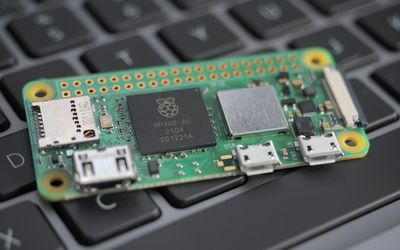
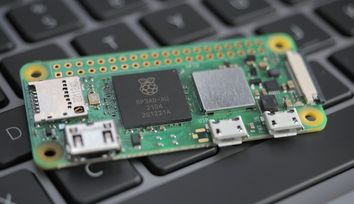
The Raspberry Pi Zero 2W features a quadcore 64 bit processor and builtin wireless in a tiny footprint. Its 40 pin header provides engineers with a flexible interface for embedded applications. This guide explores the theory behind the pinout and offers practical guidance for learners.
In IoT, return on investment (ROI) isn't just a line item; it's the North Star of every IoT deployment.
Monogoto was built as a cybersecurity-first cloud with Zero Trust, encryption, SIM-level control, and signaling visibility embedded.
TAGGED WITH cellular iot
Software-Defined Connectivity is transforming IoT, making networks programmable, scalable, and secure — just as the cloud revolutionized computing.
In IoT, return on investment (ROI) isn't just a line item; it's the North Star of every IoT deployment.
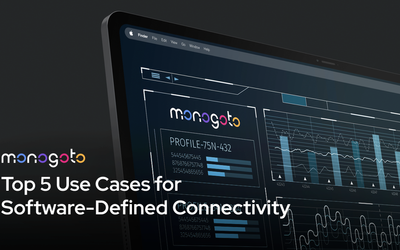
Explore the top 5 use cases of Software-Defined Connectivity (SDC) and learn how SDC reduces costs, improves compliance, and accelerates IoT innovation.
Monogoto was built as a cybersecurity-first cloud with Zero Trust, encryption, SIM-level control, and signaling visibility embedded.
Latest Posts
Like many “as a Service” solutions, LoRaWAN Connectivity as a Service is a new approach to connectivity management that radically improves the user experience when creating a new IoT solution. This video explains what "Connectivity as a Service" is and how to access it on akenza.io


Turning previously ‘dumb’ LED streetlighting ‘smart’ is one of the easiest cost-to-benefit propositions in smart city because it effectively pays for itself.

4 minutes read


DECT NR+ (NR+) will be the first-ever, non-cellular wireless technology to become part of a cellular generation (“G”) standard, starting with 5G. It's also license-free and targets massive IoT applications targeting millions or billions of nodes.
4 minutes read


IIoT stands for the Industrial Internet of Things. You've probably seen a similar set of letters, the IoT, which is the Internet of Things. IoT refers to all digitally-connected devices, over and above such familiar items as phones, tablets, laptops and PCs.



The cellular IoT technology, NB-IoT, is a leading LPWAN solution and offers up to a 15-kilometer range and low power consumption. It has been purpose-designed to conserve bandwidth and energy and has been shown to be an effective and robust solution.
3 minutes read


Article #2 of the Enabling IoT Series. CO2 sensors are among the most integral elements of such IoT applications.


Cutting edge boards and tools speed up development and reduce time to market for Bluetooth IoT applications.


Using a hypothetical fingerprint reader device as an example learn how to protect data and how to plan security implementation.


Lights-out manufacturing refers to the manufacturing methodology where factories are fully-automated. While true lights-out factories are still rare today, manufacturers can look to companies like FANUC, in Japan, for inspiration.

3 minutes read


Metasphere’s ART Sewer wastewater and sewerage spill monitoring solution combines cellular IoT and AI/machine learning (ML) to protect freshwater and marine ecosystems in a way that Metasphere says hasn’t been commercially or technologically viable until now.
4 minutes read

What is IoT Device Management and why do you need it? With IoT device management, you provision, authenticate, configure, monitor, update and diagnose the connected devices running in your IoT environment.
4 minutes read


According to research from analyst GWI, while consumers still consider fitness tracking the leading reason for owning a wearable, nearly half of all owners also expect their wearable to monitor their health.
3 minutes read

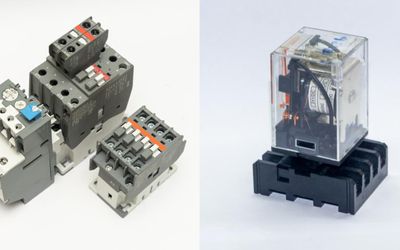
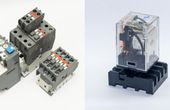
This article aims to provide a comprehensive comparison between contactors and relays, highlighting their key differences, applications, and factors to consider when choosing the right device for your needs.
Understanding your rights and responsibilities is essential to securing your innovation. Further, taking advantage of cloud manufacturing can mitigate substantial risk.


OEMs can focus on innovation and stay competitive by leveraging cloud manufacturing services.
