What is 3D printing? This article goes over the basics of 3D printing, otherwise known as additive manufacturing, covering its engineering principles and applications.
Be the first to know.
Get our Manufacturing weekly email digest.
Category
Manufacturing
Engineers Wiki. Most Asked Questions.
Comprehensive Guide
Full Adder Circuit: Theory, Design and Practical Implementation
By Muhammad Sufyan.
12 minutes read.
Half Adder Circuit—Theory, Design, and Implementation
By Muhammad Sufyan.
11 minutes read.
View more
ORGANIZATIONS. SHAPING THE INDUSTRY.


Nordic Semiconductor
Semiconductors
Nordic Semiconductor is a fabless semiconductor company specializing in wireless technology that powers the IoT.
181 Posts

The Next Byte
Entertainment
The Next Byte Podcast is hosted by two young engineers - Daniel and Farbod ...
165 Posts



View more
TAGGED WITH 3d printing
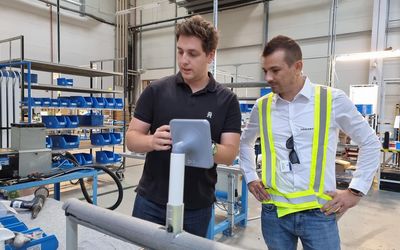
From family workshop to series production – how 3D printing helps Qvantum's factory in Nyíregyháza.
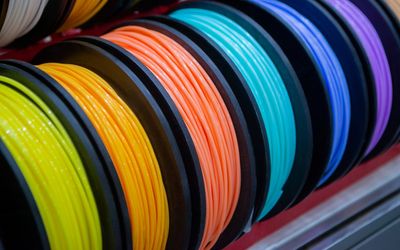
What is 3D printer filament made of? This guide examines polymers, additives, and composites, offering practical tips for digital design and hardware engineers.

Stereolithography (SLA) is a resin-based 3D printing technology that uses a UV laser to selectively cure liquid photopolymer resin layer by layer.
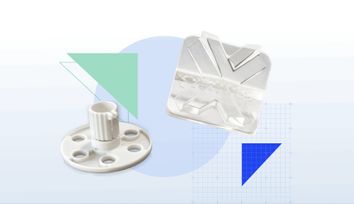

Advancing New Horizons in Additive Manufacturing (AM)

TAGGED WITH digital fabrication

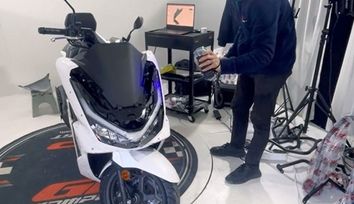
GP Kompozit used SCANOLOGY's SIMSCAN 3D scanner to accelerate motorcycle accessory design, achieving faster workflows and high-precision results.

Learn everything you need about the full adder circuit. From binary addition theory to low-power hardware implementations and modern ASIC/FPGA design flows, this technical article equips digital design engineers, hardware engineers with practical insights and current research trends.
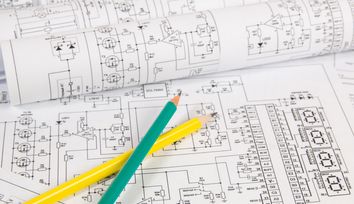

Explore how a transistor works from first principles through practical circuit design. This in depth guide explains BJT and FET operation, switching and amplification modes, design calculations, modern market trends, and FAQs, ideal for digital design engineers, hardware engineers, and students.

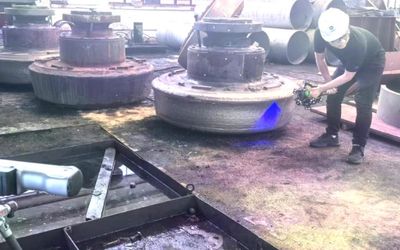
Advanced 3D scanning delivers comprehensive, high-accuracy inspection for massive grinding roller shells. It replaces manual measurement with fast, traceable digital analysis, enabling smarter maintenance and reduced operational costs.
Latest Posts
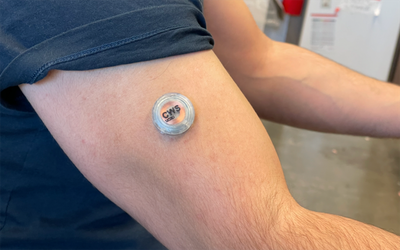
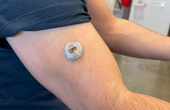
Engineers at the University of California San Diego have developed a prototype of such a wearable that can continuously monitor several health stats.
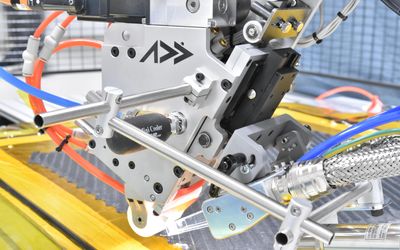
Automated Fiber Placement (AFP) is an additive manufacturing process that has three different inputs: fiber/polymer tape, heat, and pressure. This technology aims to replace manual workers in composites manufacturing with better productivity and less material waste.

4 minutes read
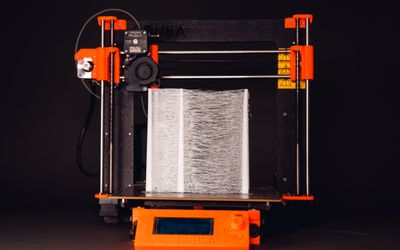
If you are printing with engineering-grade FFF materials, it is very likely that you need to dry your filaments before using them. This article will give an overview of your filament drying options, as well as their advantages, and their drawbacks!

7 minutes read
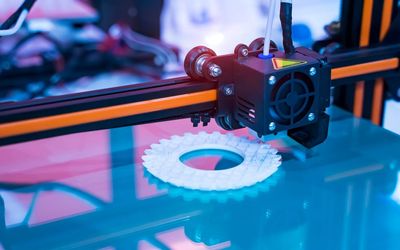
In this article, we examine the causes of 3D printing adhesion problems and how to ensure that PLA prints stick to the print bed.

Founded in 2007, Sustainable Oceans International (SOI) aims to advance artificial reef design by developing reef units that look more natural, are stable, and can be deployed easily. Director David Lennon explains how 3D printing is a key factor in this process.

3 minutes read

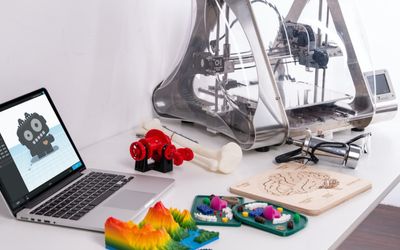
If you're seeing wispy "hairs" when printing with PLA filament, follow these troubleshooting steps to fix the problem.

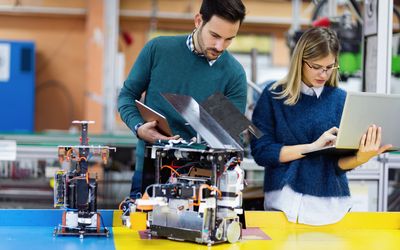
The power of cloud manufacturing enables hardware startups to be competitive with larger rivals.

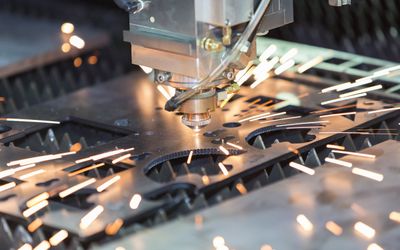
Online Manufacturing is alleviating the problem of material price fluctuations - enabling companies to focus on innovation.
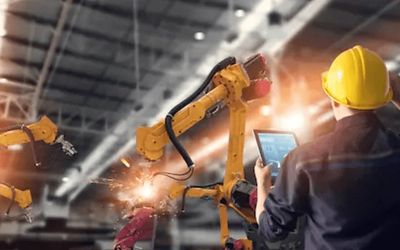
Lights-out manufacturing refers to the manufacturing methodology where factories are fully-automated. While true lights-out factories are still rare today, manufacturers can look to companies like FANUC, in Japan, for inspiration.

3 minutes read

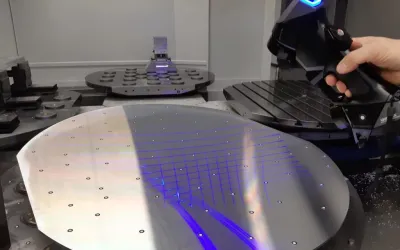
Rohde & Schwarz uses the HandySCAN 3D for quality control, measuring vehicle interiors, inspecting free-form surfaces, and additive manufacturing processes

3 minutes read

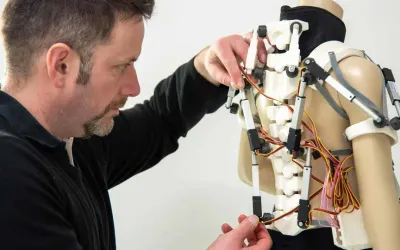
Penn State-led researchers develop first artificial skin to maintain cognitive characteristics when deformed.

2 minutes read

Matthew partnered with a local student to undertake research using the Ultimaker S5 that went on to be recognized at the UN COP26 conference.

4 minutes read
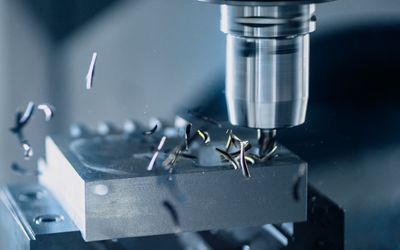
Have you considered the machining requirements for part when you are designing the CNC machining parts? On the premise of meeting the function, cosmetic appearance and reliability of products, the design of CNC parts should be easy for manufacturing and cost-efficient.


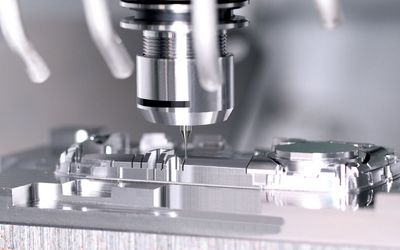
The sharp corners should be avoided in the plastic parts, as it can impede from plastic melt flow, causing flaws on parts. Meanwhile, stress concentration can be easily generated in the sharp corners and further reduces the strength of parts. Therefore, adding radii in sharp corners is suggested.
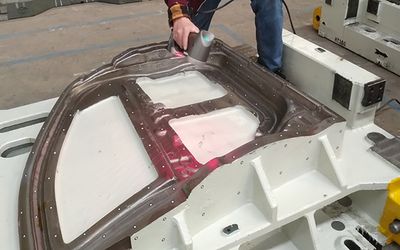
Creaform’s HandySCAN 3D, a portable 3D scanner, quickly solved the problem of measuring the clamping gap, by quickly capturing the 3D data of the entire set of molds.
2 minutes read