
What is 3D printing? This article goes over the basics of 3D printing, otherwise known as additive manufacturing, covering its engineering principles and applications.
Be the first to know.
Get our Manufacturing weekly email digest.
Category
Manufacturing
Engineers Wiki. Most Asked Questions.
Comprehensive Guide
Full Adder Circuit: Theory, Design and Practical Implementation
By Muhammad Sufyan.
12 minutes read.
Half Adder Circuit—Theory, Design, and Implementation
By Muhammad Sufyan.
11 minutes read.
View more
ORGANIZATIONS. SHAPING THE INDUSTRY.


Nordic Semiconductor
Semiconductors
Nordic Semiconductor is a fabless semiconductor company specializing in wireless technology that powers the IoT.
181 Posts

The Next Byte
Entertainment
The Next Byte Podcast is hosted by two young engineers - Daniel and Farbod ...
165 Posts



View more
TAGGED WITH 3d printing
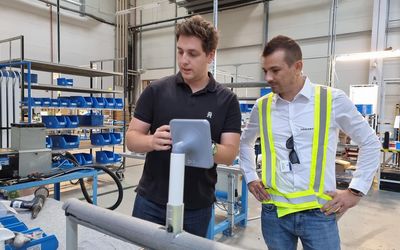
From family workshop to series production – how 3D printing helps Qvantum's factory in Nyíregyháza.
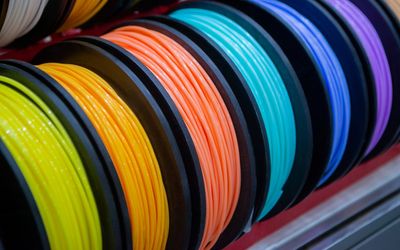
What is 3D printer filament made of? This guide examines polymers, additives, and composites, offering practical tips for digital design and hardware engineers.

Stereolithography (SLA) is a resin-based 3D printing technology that uses a UV laser to selectively cure liquid photopolymer resin layer by layer.


Advancing New Horizons in Additive Manufacturing (AM)

TAGGED WITH digital fabrication

GP Kompozit used SCANOLOGY's SIMSCAN 3D scanner to accelerate motorcycle accessory design, achieving faster workflows and high-precision results.


Learn everything you need about the full adder circuit. From binary addition theory to low-power hardware implementations and modern ASIC/FPGA design flows, this technical article equips digital design engineers, hardware engineers with practical insights and current research trends.


Explore how a transistor works from first principles through practical circuit design. This in depth guide explains BJT and FET operation, switching and amplification modes, design calculations, modern market trends, and FAQs, ideal for digital design engineers, hardware engineers, and students.


Advanced 3D scanning delivers comprehensive, high-accuracy inspection for massive grinding roller shells. It replaces manual measurement with fast, traceable digital analysis, enabling smarter maintenance and reduced operational costs.

Latest Posts

A comprehensive guide to half adder circuits for engineers and technical learners. Learn the theory behind half adders, explore truth tables, logic expressions, K maps, implementations with Logic gates, TTL/CMOS ICs, Verilog modelling, propagation delays, design strategies, and applications.

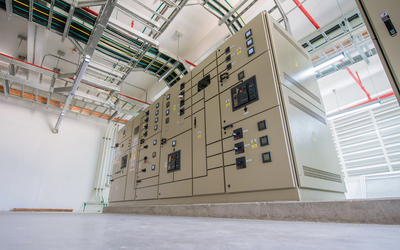
Discover why surge protection is critical for Industrial IoT reliability, ensuring consistent uptime, stable clamping performance, and long-term resilience across connected industrial systems.

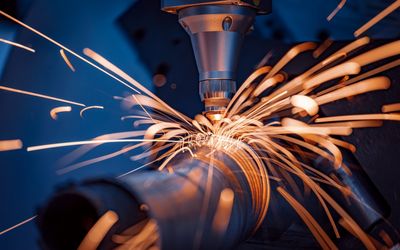
CNC machining aluminum combines precision digital control with the versatile properties of aluminum alloys. This article explores the science and practice of CNC machining aluminum.

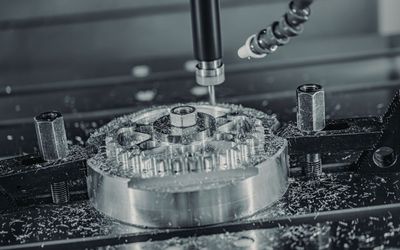
In scientific and medical industries today, precision and reliability are the foundation of every successful innovation. Whether it is laboratory testing devices, analytical instruments, or electronic measurement tools, the demand for high accuracy and consistent quality has never been higher.

2 minutes read


SCANOLOGY's 3D scanning empowers wind turbine blade manufacturers to precisely control core dimensions, eliminate rework, and achieve seamless assembly—turning a long-standing "core challenge" into data-driven manufacturing excellence.

4 minutes read


Aerospace CNC machining is the backbone of modern aircraft production. This guide explains the theory and practice behind it.


In fast-paced healthcare, speed and precision are vital. CNC machining delivers unmatched accuracy, flexibility, and rapid turnaround for medical device development.


Additive Manufacturing (AM) is transforming the European automotive industry; enhancing supply chain resilience, sustainability, and design freedom while driving innovation toward scalable, data-driven production.

Advancing New Horizons in Additive Manufacturing (AM)

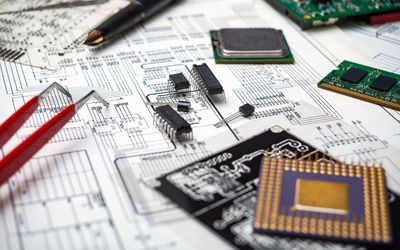
Arithmetic units are a core element in digital systems. But their design is not as simple as it may seem. This article explores the theory behind 4 bit adders and their comparison with various architectures. It will examine integrated circuits and discuss the modern low power research and designs.

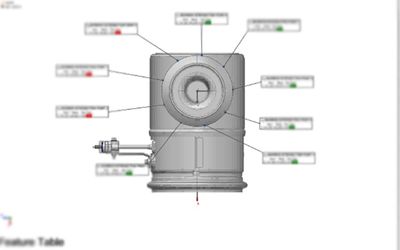
SCANOLOGY's automated 3D scanning solution combines optical tracking and collaborative robotics to inspect emission control components with exceptional speed, accuracy, and consistency—helping manufacturers meet strict environmental and quality standards.
4 minutes read

Explore how ultra-thin inductors and high-current ferrite beads deliver superior EMI mitigation, power efficiency, and reliability in high-density, high-frequency electronic designs.

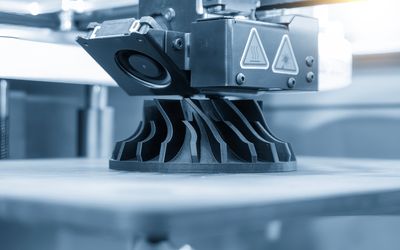
Discover how additive manufacturing revolutionizes mechanical and plant engineering, enabling lightweight designs, smart materials, and efficient production. Explore the innovations and collaborations shaping the future at Formnext 2025.


EPFL researchers have engineered a fiber-based electronic sensor that remains functional even when stretched to over 10 times its original length. The device holds promise for smart textiles, physical rehabilitation devices, and soft robotics.

3 minutes read

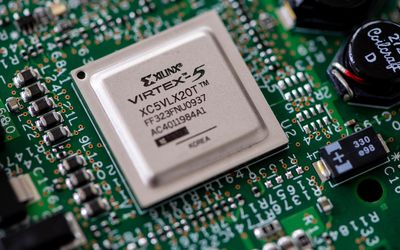
A comprehensive overview of fully depleted silicon on insulator technology, covering device physics, process nodes and practical design approaches to help digital and hardware engineers leverage FDSOI for low power, high performance, and RF/mm wave applications.