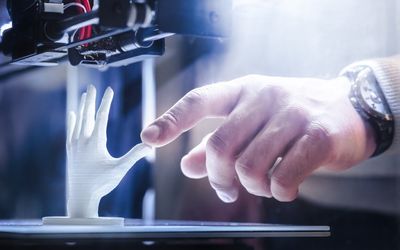
What is 3D printing? This article goes over the basics of 3D printing, otherwise known as additive manufacturing, covering its engineering principles and applications.
Be the first to know.
Get our Manufacturing weekly email digest.
Category
Manufacturing
Engineers Wiki. Most Asked Questions.
Comprehensive Guide
Full Adder Circuit: Theory, Design and Practical Implementation
By Muhammad Sufyan.
12 minutes read.
Half Adder Circuit—Theory, Design, and Implementation
By Muhammad Sufyan.
11 minutes read.
View more
ORGANIZATIONS. SHAPING THE INDUSTRY.


Nordic Semiconductor
Semiconductors
Nordic Semiconductor is a fabless semiconductor company specializing in wireless technology that powers the IoT.
181 Posts

The Next Byte
Entertainment
The Next Byte Podcast is hosted by two young engineers - Daniel and Farbod ...
165 Posts


View more
TAGGED WITH 3d printing
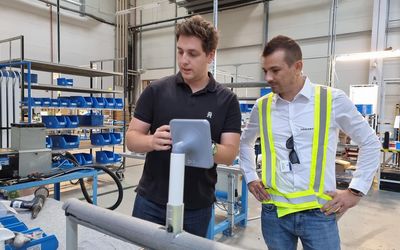
From family workshop to series production – how 3D printing helps Qvantum's factory in Nyíregyháza.
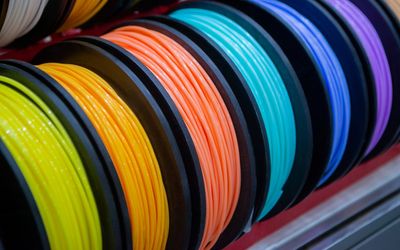
What is 3D printer filament made of? This guide examines polymers, additives, and composites, offering practical tips for digital design and hardware engineers.

Stereolithography (SLA) is a resin-based 3D printing technology that uses a UV laser to selectively cure liquid photopolymer resin layer by layer.

Advancing New Horizons in Additive Manufacturing (AM)

TAGGED WITH digital fabrication

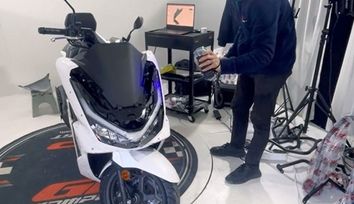
GP Kompozit used SCANOLOGY's SIMSCAN 3D scanner to accelerate motorcycle accessory design, achieving faster workflows and high-precision results.
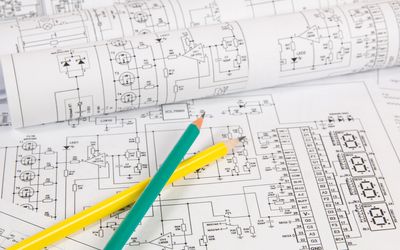
Learn everything you need about the full adder circuit. From binary addition theory to low-power hardware implementations and modern ASIC/FPGA design flows, this technical article equips digital design engineers, hardware engineers with practical insights and current research trends.

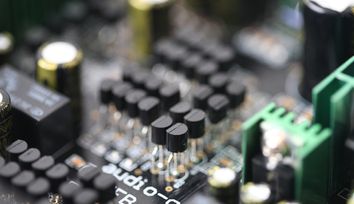
Explore how a transistor works from first principles through practical circuit design. This in depth guide explains BJT and FET operation, switching and amplification modes, design calculations, modern market trends, and FAQs, ideal for digital design engineers, hardware engineers, and students.
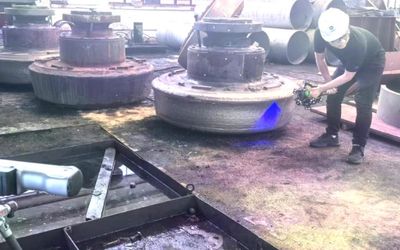
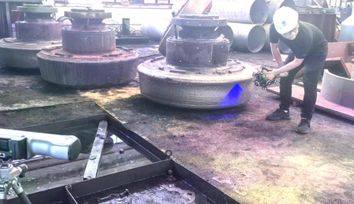
Advanced 3D scanning delivers comprehensive, high-accuracy inspection for massive grinding roller shells. It replaces manual measurement with fast, traceable digital analysis, enabling smarter maintenance and reduced operational costs.
Latest Posts
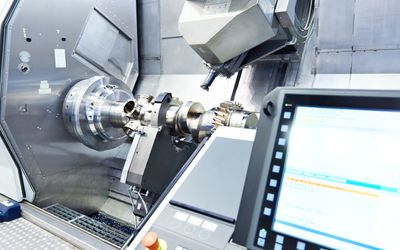
Stepper motors are named after their internal mechanism, which moves the motor shaft in precise, incremental steps, each representing a fixed rotation angle.


A time delay relay is an electronic device used to control the opening and shutting of contacts following a preset time interval.

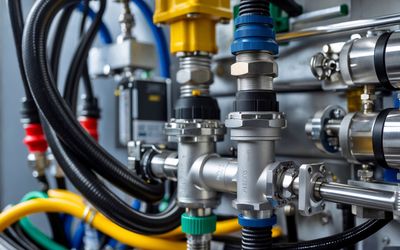
We use pneumatic systems for many industrial purposes, such as automation, manufacturing and process control.

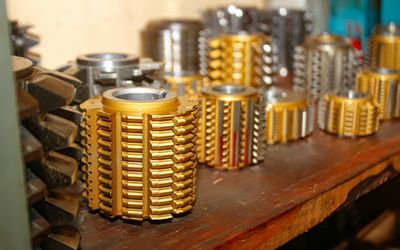
Anodizing is a surface treatment that strengthens aluminum parts by turning the outer layer into a hard, protective coating.

3 minutes read
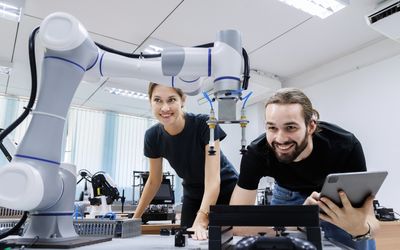
For students and early-career engineers, preparing for the job market can feel like navigating uncharted waters. Watch this on-demand AMA (ask-me-anything) with a Siemens recruiter and an engineering hiring manager to help you land your next engineering job.

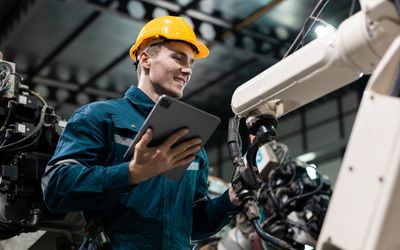
The Siemens Expedite - Skills for Industry is an essential free short course for recent engineering graduates.


What if your next critical manufacturing project was halted by an unexpected supply chain disruption? In modern manufacturing, that is a constant risk. Staying on track requires agile sourcing, real-time coordination, and partners who can adapt when plans shift.


MIT CSAIL researchers developed SustainaPrint, a system that reinforces only the weakest zones of eco-friendly 3D prints, achieving strong results with less plastic.

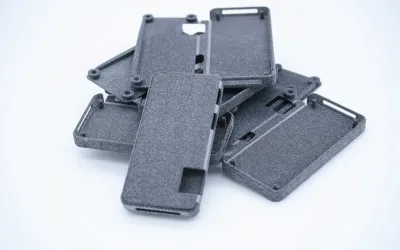
3D printing is no longer just a prototyping tool—it's a viable option for serial production. For small to mid-sized batches, especially where agility, customization, or geometric freedom matters, 3D printing can beat traditional methods like injection molding or CNC machining.

5 minutes read
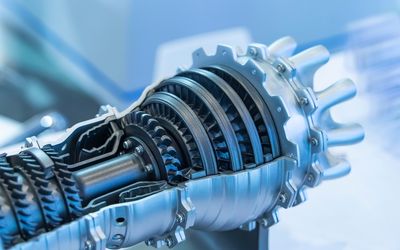
The applications of 3D printing span many industries, from aircraft fuel nozzles to dental aligners. Here we look at some of the most important uses of the technology.

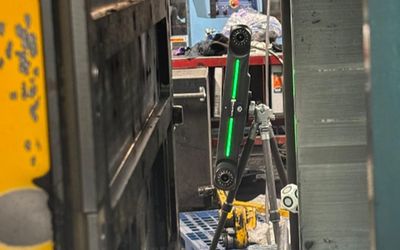
Discover how Metal Technologies enhanced mold alignment with SCANOLOGY's fast, portable 3D scanning solution, achieving accurate, repeatable measurements and greater efficiency despite high-temperature and space-constrained foundry conditions.

3 minutes read

Non-invasive, wearable sensor can identify and track lactate in low-perspiration conditions, researchers say

4 minutes read

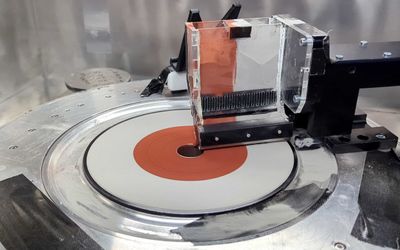
Students at ETH Zurich have developed a laser power bed fusion machine that follows a circular tool path to print round components, thereby being able to process multiple metals at once. The system significantly reduces manufacturing time and opens up new possibilities for aerospace and industry.

4 minutes read

Come with us on a journey of integration – from prototype to production – in the narrative framework of fictional company Precision Parts Inc.

4 minutes read


AI is reshaping 3D printing by optimizing workflows, cutting waste, and enhancing design. At Formnext 2025, industry leaders will showcase how these innovations are driving efficiency and pushing the boundaries of additive manufacturing.