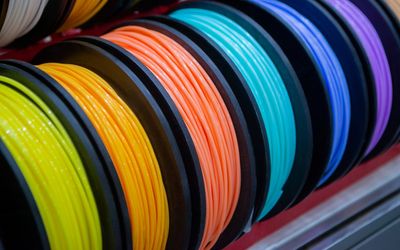
What is 3D printer filament made of? This guide examines polymers, additives, and composites, offering practical tips for digital design and hardware engineers.
Be the first to know.
Get our Materials weekly email digest.
Category
Materials
Engineers Wiki. Most Asked Questions.
How to Solder Wires: Comprehensive Guide for Engineers
By Umar Waseem.
15 minutes read.
ABS vs PLA: Which Filament Should You Use?
By Benedict O'Neill.
18 minutes read.
View more
ORGANIZATIONS. SHAPING THE INDUSTRY.


The Next Byte
Entertainment
The Next Byte Podcast is hosted by two young engineers - Daniel and Farbod - who select the most interesting tech/engineering cont...
165 Posts




ETH Zurich
University for science and technology
Freedom and individual responsibility, entrepreneurial spirit and open-min...
43 Posts
View more
TAGGED WITH smart material printing

Advancing New Horizons in Additive Manufacturing (AM)

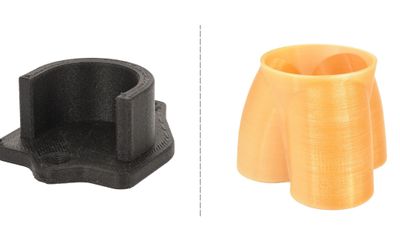
Discover how to print with high-performance filaments like PEEK, PEKK, and ULTEM. Learn about their properties, hardware needs, challenges, and best practices for industrial-grade 3D printing.
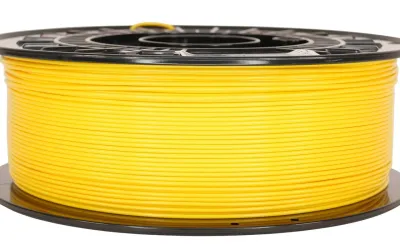
Explore how 3D-Fuel's Pro PCTG filament advances additive manufacturing, offering higher impact strength, improved environmental resistance, and reliable printability for functional and industrial 3D printing applications.
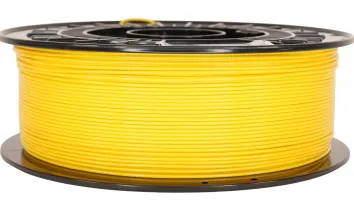

3devo's next-generation desktop extruder combines industrial precision with lab-scale simplicity enabling more controlled, higher-performance and data-driven 3D printing material workflows.

TAGGED WITH lightweighting
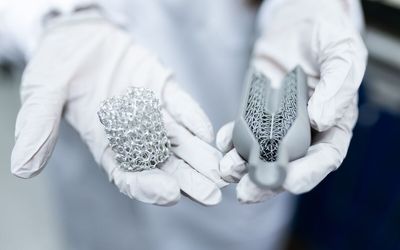
Lightweighting materials play a crucial role in offering the potential for improved fuel efficiency, enhanced performance, and reduced emissions in the automotive industry. It is anticipated that the lighter and more efficient automotive materials and components will revolutionize the industry in the coming years.
Latest Posts
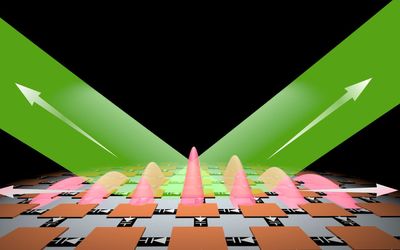
Photonic time crystals, whose properties change periodically, promise significant advances in microwave technology, optics and photonics. Researchers at the Karlsruhe Institute of Technology (KIT), together with partners at Aalto University and Stanford University, have now produced a two-dimensional photonic time crystal for the first time and demonstrated important applications.

3 minutes read

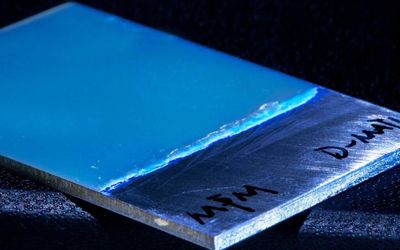
In this episode, we talk about a breakthrough research project that resulted in a corrosion protection coating capable of similar performance as current state of the art, lower cost per application, ability to self heal, and illuminates cracks/pits in the coating for easier detection.
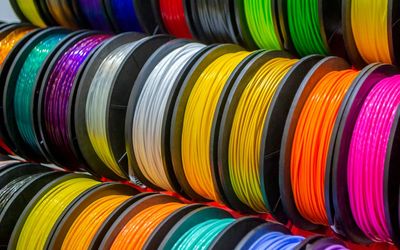
Beginners are often confused by the plethora of material options available for 3D Printing. In this article, we explore the different materials available and how their unique properties influence their utility.

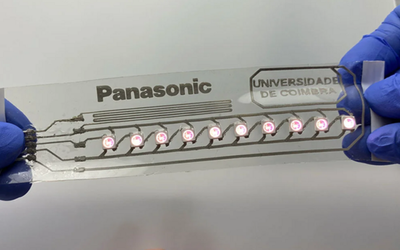
A novel stretchable film has been developed for soft & stretchable circuit / electronic solutions, outperforming existing films like TPU. Here you can learn about case studies showcasing its potential in pliable PCBs, stretchable hybrid PCBs, and truly stretchable electronics.

3 minutes read
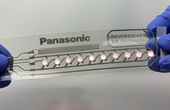
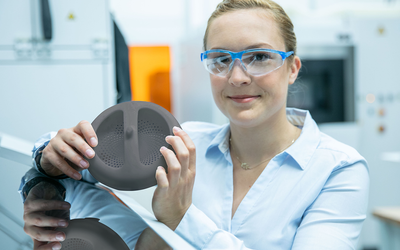
Addressing the risks and challenges of electrostatic discharge in manufacturing thanks to innovative 3D printing materials.

7 minutes read


In this episode we talk about how researchers at EPFL have developed a new method of 3D printing bone-like composites using bacteria-infused ink. The process involves the use of hydrogel as a printing medium that provides a scaffold for bacterial growth, which produces calcium carbonate crystals that mimic the properties of bone.


Electron beam evaporation is a physical vapor deposition process capable of applying nano-scale thin films to substrates.


The beauty of additive manufacturing is in the flexibility these technologies provide in terms of scale, shape, and materials. Building know-how on software has allowed Caracol to leverage these skills and adapt them to working with robotics for LFAM on different processes - from its proprietary thermoplastic/composite pellet extrusion Heron AM to introducing Metal with WAAM.


Introducing the first soft material that can maintain a high enough electrical conductivity to support power hungry devices.

3 minutes read

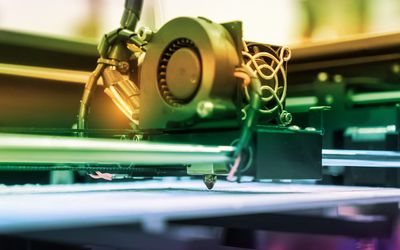
The most common plastic in the world, but can it be 3D printed? The answer is not as straightforward as you may think.

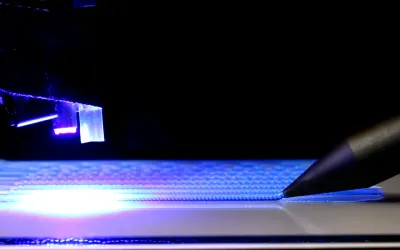
In this episode, we talk about a novel approach to multi-material 3D printing that’ll enable the production of soft components capable of contracting in a similar fashion to muscles.


EPFL researchers have published a method for 3D-printing an ink that contains calcium carbonate-producing bacteria. The 3D-printed mineralized bio-composite is unprecedently strong, light, and environmentally friendly, with a range of applications from art to biomedicine.

3 minutes read


Nearly a decade ago, researchers heralded the discovery of a new wonder class of ultrathin materials with special optical and electrical properties that made it a potential rival for graphene, a form of carbon discovered in 2004 whose own special properties interest both scientists and engineers.

3 minutes read

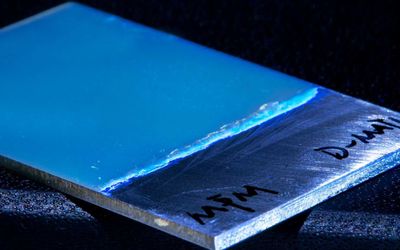
ETH Zurich researchers have developed an extraordinary protection against corrosion after a chance discovery. It glows in places where it is not damaged, repairs itself – and can be reused multiple times.

4 minutes read

The benefits of flexible materials come with challenges when it comes to post-processing.
11 minutes read