
Artificial intelligence (AI) is a wide-ranging tool that enables people to rethink how we integrate information, analyze data, and use the resulting insights to improve decision making
Be the first to know.
Get our A.I. weekly email digest.
Category
A.I.
Engineers Wiki. Most Asked Questions.
Comprehensive Guide
TPU vs GPU: Comprehensive Technical Comparison
By Umar Waseem.
14 minutes read.
What is High Bandwidth Memory 3 (HBM3): Complete Engineering Guide 2025
By Umar Waseem.
15 minutes read.
HBM Memory: Complete Engineering Guide & Design Optimization 2025
By Umar Waseem.
14 minutes read.
View more
ORGANIZATIONS. SHAPING THE INDUSTRY.


The Next Byte
Entertainment
The Next Byte Podcast is hosted by two young engineers - Daniel and Farbod - who select the most interesting tech/engineering cont...
165 Posts



High Tech Campus Eindhoven
High Tech
High Tech Campus Eindhoven is Europe's smartest square km and has the ultim...
49 Posts

ETH Zurich
University for science and technology
Freedom and individual responsibility, entrepreneurial spirit and open-min...
43 Posts
View more
TAGGED WITH machine learning
The virtual VideoCAD tool could boost designers' productivity and help train engineers learning computer-aided design.
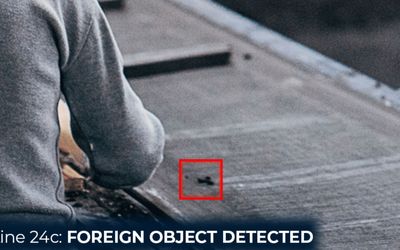
In large-scale warehousing and distribution operations, conveyor belts are an essential infrastructure that must operate with near-zero downtime to ensure the timely delivery of products. The presence of loose or foreign items on a conveyor belt can pose a serious risk to these operations.
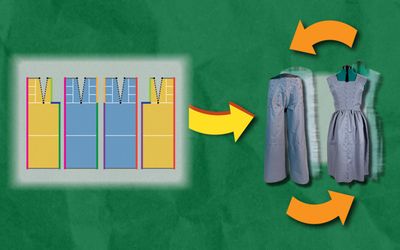
To reduce waste, the Refashion program helps users create outlines for adaptable clothing, such as pants that can be reconfigured into a dress. Each component of these pieces can be replaced, rearranged, or restyled.

Smart eyewear promises to transform how we see and interact with the world. Among its many potential advantages, the technology offers hands-free access to information, vision enhancement, and accessibility tools.

TAGGED WITH computer vision
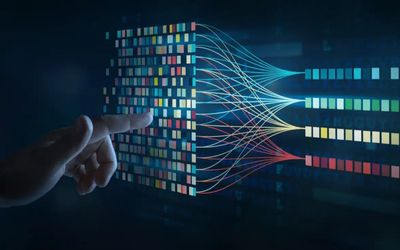
Matroid builds no-code computer-vision detectors that can spot everything from microscopic material defects to real-time safety hazards on a factory floor.
In large-scale warehousing and distribution operations, conveyor belts are an essential infrastructure that must operate with near-zero downtime to ensure the timely delivery of products. The presence of loose or foreign items on a conveyor belt can pose a serious risk to these operations.
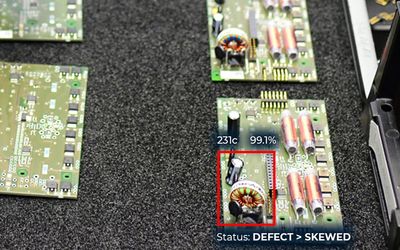
In this post, we'll walk through how to evaluate that progress using the same metrics our platform provides automatically, so you can build detectors that get smarter, sharper, and more reliable over time.
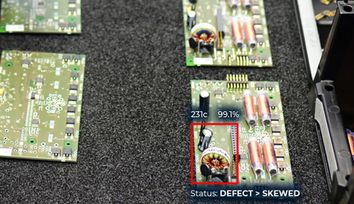
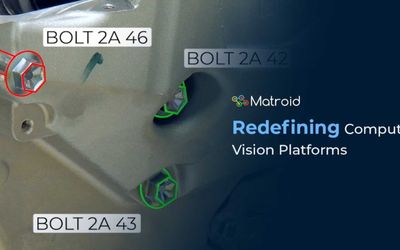
The no-code platform from Matroid trains ordinary cameras to act like expert inspectors, turning simple footage into a pixel-level defect checklist. Even a handheld GoPro can spot issues human eyes miss—using remarkably small datasets.
Latest Posts
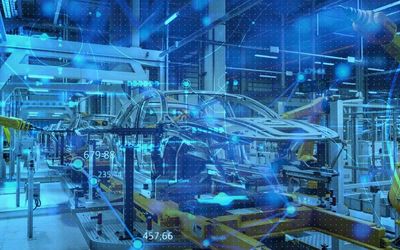
In recent years, the use of devices and systems that utilize data to function in an intelligent manner has become commonplace. Machines that make high-level decisions comparable to humans and those that surpass humans in performing work depending on how they are applied have also appeared.

6 minutes read
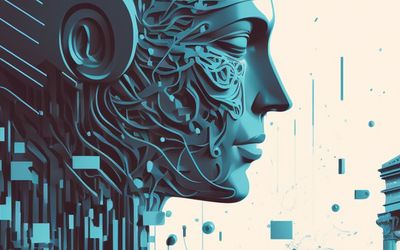
The study aims to help society, including regulators considering AI safety regulations and organizations considering adopting AI, understand the societal implications of ever-smarter machines.

3 minutes read


We proclaim 2022 The Year of Innovation. In this "End of the Year" list we highlight 25 Campus high-tech, innovative companies, including multi-nationals, startups, scale-ups and everything in-between. These are companies of the future, and they’re all here at HTCE.

7 minutes read

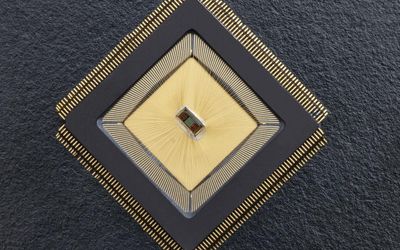
In this episode, we talk about NeuralTree: a neural interface capable of detecting neural impulses associated with brain disorders and countering them.


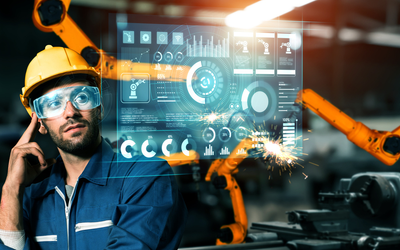
Without data, the IoT would be useless. The electromechanical and electronic sensors used to collect information are just as important to the IoT’s digital brains as sight, smell, hearing, and touch are to human organic ones.

3 minutes read
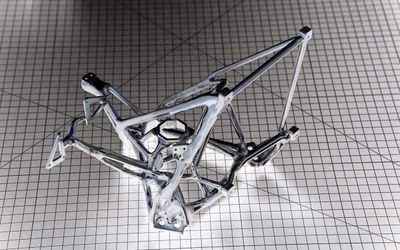
Spacecraft and mission hardware designed by an artificial intelligence may resemble bones left by some alien species, but they weigh less, tolerate higher structural loads, and require a fraction of the time parts designed by humans take to develop.

3 minutes read


In light of such changes in society, interest in PetTech (pet × technology) utilizing the latest technologies is increasing year by year. This time, we introduce the latest technologies that will bring comfort and safety to life with pets by making full use of artificial intelligence (AI) and IoT.
4 minutes read

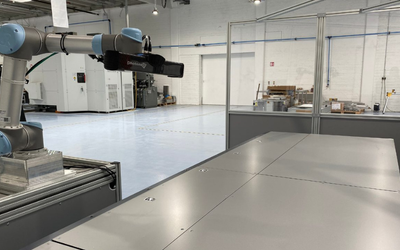
The MAAS project team developed a unique, end-to-end solution for the assembly of airplane wing parts, which uses Photoneo 3D vision technology to handle challenges such as screw hole misalignment, panel to panel step height, and gaps out of specification.

4 minutes read
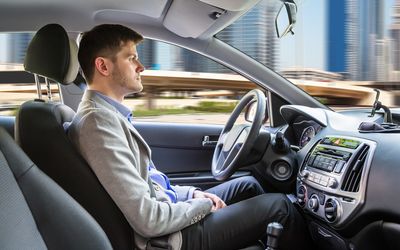
Article #4 of Innovations in Electric and Autonomous Vehicles Series: Advances in technology and new safety regulations are accelerating the adoption of Driver Monitoring Systems (DMS) into passenger vehicles. DMS is expected to be a mandatory feature in new cars in many countries by the end of the decade.

7 minutes read


Article #3 of Innovations in Electric and Autonomous Vehicles Series: 3GPP intends to use 5G in vehicle-to-everything (V2X) applications with significant advantages over current dedicated short-range communication or other cellular-V2X proposals.
11 minutes read

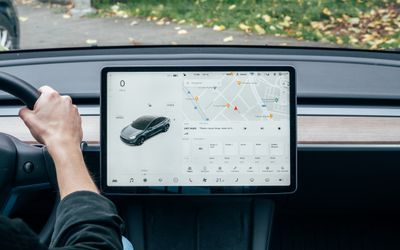
Article #1 of Innovations in Electric and Autonomous Vehicles Series: With so much emphasis on electrification, advancements in autonomous driving seem to have taken a backseat. Let’s take a look at the changes required to reach the point where cars drive around without needing any manual intervention.

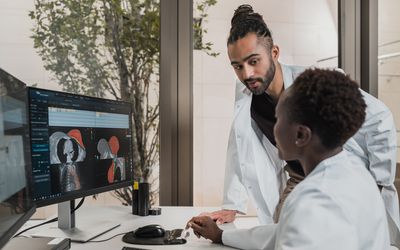
If you talk to the co-founders of Campus startup Autoscriber, they will tell you the biggest revolution in healthcare will be data-driven. “The moment you talk to your doctor and say, ‘I have a headache,’ artificial intelligence will start to mine your whole medical history. It will compare it to other people with your genetic background to calculate what is the most likely diagnosis,” said Koen Bonenkamp, one of two Autoscriber co-founders. This is the company’s vision behind its software.
4 minutes read

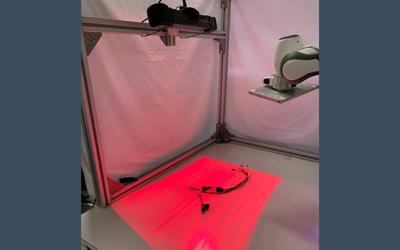
3D scanning and robotic manipulation of very thin objects such as wiring harnesses by the Department of Electrical, Electronic and Information Engineering at the University of Bologna.

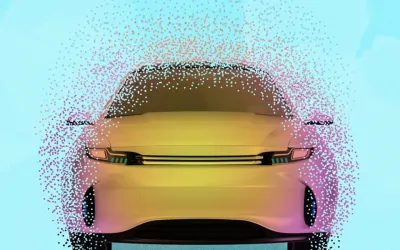
In this episode, we talk about a research study from MIT that estimates the carbon emissions associated with autonomous vehicles will match that currently produced by all of the data centers in the world along with how to address it.

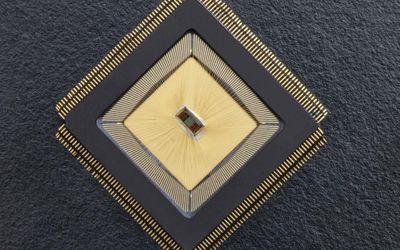
EPFL researchers have combined low-power chip design, machine learning algorithms, and soft implantable electrodes to produce a neural interface that can identify and suppress symptoms of various neurological disorders.

3 minutes read