
Under the EPFL-led ADOPT project, researchers are combining AI satellite-image recognition with drift prediction models to improve the collection of plastic debris in the ocean. The technology has passed the proof-of-concept stage and is ready for field testing.

To help generative AI models create durable, real-world accessories and decor, the PhysiOpt system runs physics simulations and makes subtle tweaks to its 3D blueprints.
Explore why computing is shifting from cloud to edge, how local data processing reduces latency and bandwidth use, and the technologies enabling AI, IoT, and real-time intelligence at the edge.
Artificial intelligence (AI) is a wide-ranging tool that enables people to rethink how we integrate information, analyze data, and use the resulting insights to improve decision making
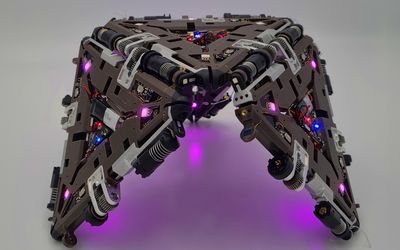
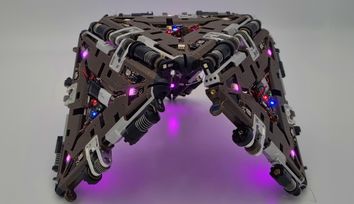
EPFL roboticists have shown that when a modular robot shares power, sensing, and communication resources among its individual units, it is significantly more resistant to failure than traditional robotic systems, where the breakdown of one element often means a loss of functionality.
MIT researchers' DiffSyn model offers recipes for synthesizing new materials, enabling faster experimentation and a shorter journey from hypothesis to use.
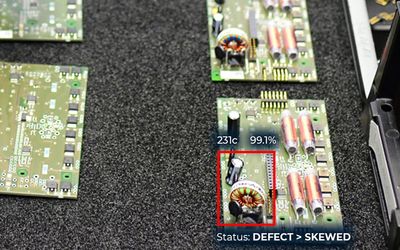
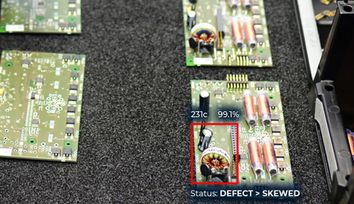
Matroid builds no-code computer-vision detectors that can spot everything from microscopic material defects to real-time safety hazards on a factory floor.
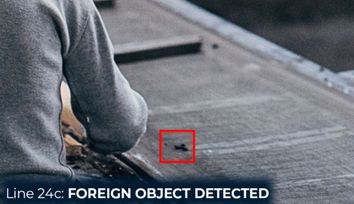
In large-scale warehousing and distribution operations, conveyor belts are an essential infrastructure that must operate with near-zero downtime to ensure the timely delivery of products. The presence of loose or foreign items on a conveyor belt can pose a serious risk to these operations.
In this post, we'll walk through how to evaluate that progress using the same metrics our platform provides automatically, so you can build detectors that get smarter, sharper, and more reliable over time.
Under the EPFL-led ADOPT project, researchers are combining AI satellite-image recognition with drift prediction models to improve the collection of plastic debris in the ocean. The technology has passed the proof-of-concept stage and is ready for field testing.

To help generative AI models create durable, real-world accessories and decor, the PhysiOpt system runs physics simulations and makes subtle tweaks to its 3D blueprints.
Explore why computing is shifting from cloud to edge, how local data processing reduces latency and bandwidth use, and the technologies enabling AI, IoT, and real-time intelligence at the edge.
An AI control system co-developed by SMART researchers enables soft robotic arms to learn a broad set of motions once and adapt instantly to changing conditions without retraining.

Designing efficient data center cooling systems requires a deep understanding of thermodynamics, energy metrics, airflow management, and emerging liquid cooling technologies. This article explains these concepts and provides practical guidance on implementing sustainable cooling solutions

Amir Barati Farimani is teaching 3D printers to see, diagnose, and self-correct errors in real time using a new large language model. The AI-powered system works with any 3D printer to produce stronger parts and automate quality assurance.
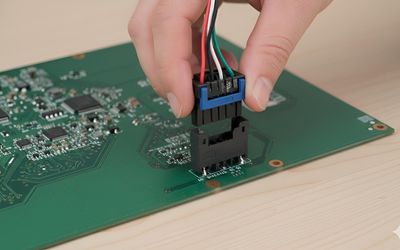
OMRONs XW4M/XW4N push-in terminal block PCB connectors are designed to simplify wiring, inspection, and maintenance while supporting consistent performance in industrial systems.
EPFL roboticists have shown that when a modular robot shares power, sensing, and communication resources among its individual units, it is significantly more resistant to failure than traditional robotic systems, where the breakdown of one element often means a loss of functionality.
MIT researchers' DiffSyn model offers recipes for synthesizing new materials, enabling faster experimentation and a shorter journey from hypothesis to use.