
Artificial intelligence (AI) is a wide-ranging tool that enables people to rethink how we integrate information, analyze data, and use the resulting insights to improve decision making
Be the first to know.
Get our A.I. weekly email digest.
Category
A.I.
Engineers Wiki. Most Asked Questions.
Comprehensive Guide
TPU vs GPU: Comprehensive Technical Comparison
By Umar Waseem.
14 minutes read.
What is High Bandwidth Memory 3 (HBM3): Complete Engineering Guide 2025
By Umar Waseem.
15 minutes read.
HBM Memory: Complete Engineering Guide & Design Optimization 2025
By Umar Waseem.
14 minutes read.
View more
ORGANIZATIONS. SHAPING THE INDUSTRY.


The Next Byte
Entertainment
The Next Byte Podcast is hosted by two young engineers - Daniel and Farbod - who select the most interesting tech/engineering cont...
165 Posts



High Tech Campus Eindhoven
High Tech
High Tech Campus Eindhoven is Europe's smartest square km and has the ultim...
49 Posts

ETH Zurich
University for science and technology
Freedom and individual responsibility, entrepreneurial spirit and open-min...
43 Posts
View more
TAGGED WITH machine learning
The virtual VideoCAD tool could boost designers' productivity and help train engineers learning computer-aided design.
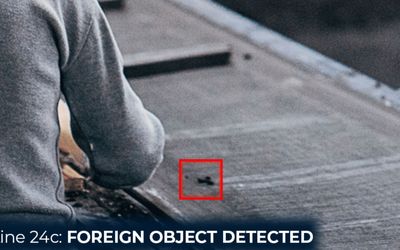
In large-scale warehousing and distribution operations, conveyor belts are an essential infrastructure that must operate with near-zero downtime to ensure the timely delivery of products. The presence of loose or foreign items on a conveyor belt can pose a serious risk to these operations.

To reduce waste, the Refashion program helps users create outlines for adaptable clothing, such as pants that can be reconfigured into a dress. Each component of these pieces can be replaced, rearranged, or restyled.


Smart eyewear promises to transform how we see and interact with the world. Among its many potential advantages, the technology offers hands-free access to information, vision enhancement, and accessibility tools.

TAGGED WITH computer vision

Matroid builds no-code computer-vision detectors that can spot everything from microscopic material defects to real-time safety hazards on a factory floor.

In large-scale warehousing and distribution operations, conveyor belts are an essential infrastructure that must operate with near-zero downtime to ensure the timely delivery of products. The presence of loose or foreign items on a conveyor belt can pose a serious risk to these operations.
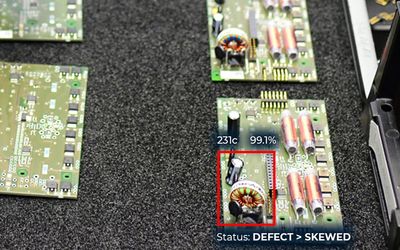
In this post, we'll walk through how to evaluate that progress using the same metrics our platform provides automatically, so you can build detectors that get smarter, sharper, and more reliable over time.
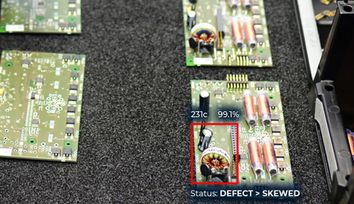
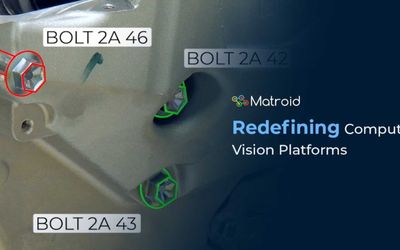
The no-code platform from Matroid trains ordinary cameras to act like expert inspectors, turning simple footage into a pixel-level defect checklist. Even a handheld GoPro can spot issues human eyes miss—using remarkably small datasets.
Latest Posts

'Fashion tech' refers to the use of big data, AI, AR/VR, and IT in customer services; the development of products incorporating functional materials and wearable devices; and the application of electronics and digital technologies in manufacturing, processing, and distribution processes.

4 minutes read


Beyond 5G (5th generation and later mobile communications system: hereinafter “B5G”) / 6G (6th generation mobile communications system) is expected to be applied and spread in popularity as a new form of information communications infrastructure from the 2030s.
5 minutes read


The "smart home" is a near future housing concept that utilizes advanced information processing technologies to improve the efficiency and prosperity of life.
9 minutes read


A deep dive into the convergence of generative AI and edge computing.

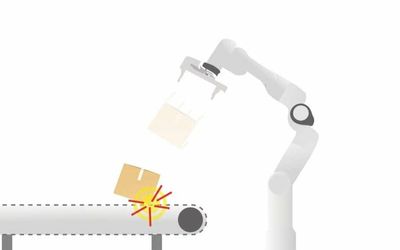
To achieve greater efficiency, robots must develop more human-like skills, such as fast physical interaction. That was the focus of the I.AM project.

4 minutes read

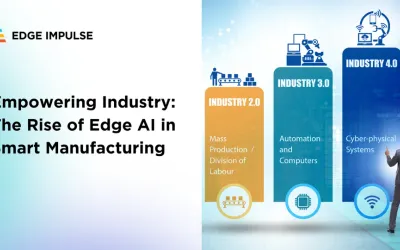
Smart manufacturing integrates advanced technologies such as the Internet of Things (IoT), big data analytics, and artificial intelligence (AI) to enhance efficiencies, improve product quality, and gain a competitive advantage.

6 minutes read

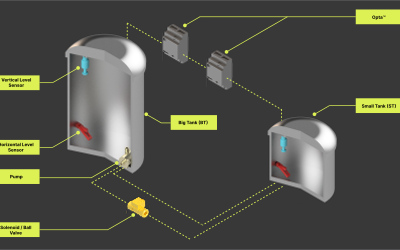
The need for advanced tank monitoring and pump control solutions is growing across industries – from water treatment to aquaculture to industrial utilities. Meanwhile, smart technology is transforming tank management for a variety of liquids, ensuring a streamlined process and minimizing risks.

3 minutes read

Curious about how AI predicts trends or creates new content? In this piece, we dive into Predictive AI vs. Generative AI, exploring their core differences and real-world impact. Discover how these technologies shape everything from recommendations to creativity.


In this episode, we chat with Karsten Roscher - a renowned AI expert at the Fraunhofer Institute for Cognitive Systems IKS - about the importance of safety in AI products, the current challenges facing experts, and what the future holds.


Researchers have found that AI large language models, like GPT-4, are better at predicting what comes next than what came before in a sentence. This “Arrow of Time” effect could reshape our understanding of the structure of natural language, and the way these models understand it.

3 minutes read

RISC-V offers the tools needed to foster local AI innovation while also enabling worldwide collaboration and access to a global market

Unleashing the Power of GPU, understanding the essential strategies for efficient Deep Learning Model Training without compromising on memory and hardware resources in Graphical Processing Units
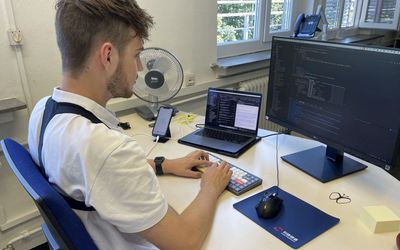
KIT spin-off StraightUp aims to permanently relieve posture-related back pain

3 minutes read

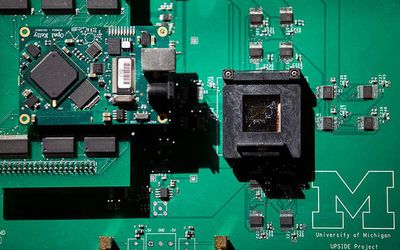
Newly discovered role of phase separation can help develop memory devices for energy-efficient AI computing.

3 minutes read


Weighing Latency, Privacy, and Scalability to Optimize Your AI Strategy