





Be the first to know.
Get our artificial intelligence  weekly email digest.

Tagged with

artificial intelligence

ORGANIZATIONS.

SHAPING THE INDUSTRY.

The Next Byte

Entertainment

The Next Byte Podcast is hosted by two young engineers - Daniel and Farbod - who select the most interesting tech/engineering cont...

165 Posts

EPFL

University

Located in Switzerland, EPFL is one of Europe’s most vibrant and cosmopolit...

56 Posts

High Tech Campus Eindhoven

High Tech

High Tech Campus Eindhoven is Europe's smartest square km and has the ultim...

49 Posts

ETH Zurich

University for science and technology

Freedom and individual responsibility, entrepreneurial spirit and open-​min...

43 Posts

Edge Impulse

Machine Learning

Edge Impulse offers the latest in machine learning tooling, enabling all en...

24 Posts

View more

Latest Posts

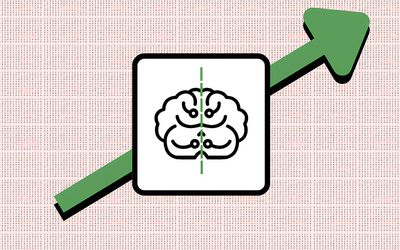
Researchers at EPFL have developed a new, uniquely modular machine learning model for flexible decision-making. It is able to input any mode of text, video, image, sound, and time-series and then output any number, or combination, of predictions.

Anything-in-anything-out: a new modular AI model

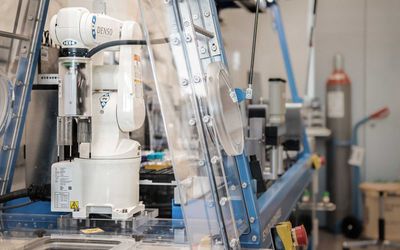
Artificial intelligence and automated laboratory infrastructure are massively accelerating the development of new chemical catalysts. With these tools, researchers at ETH Zurich are developing catalysts for efficiently and cost-​effectively synthesising the energy source methanol from CO2.

A sustainable fuel and chemical from the robotic lab

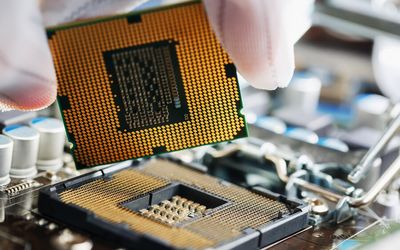
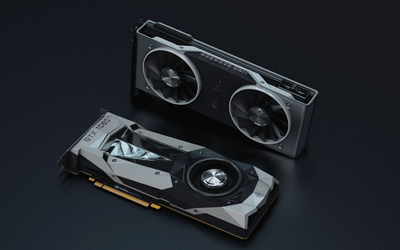
Nvidia’s CUDA cores are specialized processing units within Nvidia graphics cards designed for handling complex parallel computations efficiently, making them pivotal in high-performance computing, gaming, and various graphics rendering applications.

Understanding Nvidia CUDA Cores: A Comprehensive Guide

Arm's Ian Bratt discusses the evolving landscape of AI and edge computing, emphasizing the growing demand for AI at the edge, the continuous optimization of AI models, and the importance of software and ecosystem development.

BrainChip Podcast: Insights from Arm's Ian Bratt