

In the final chapter of the Edge AI Technology Report: Generative AI Edition explores the technical hurdles organizations face as they attempt to leverage edge-based generative AI. It also examines strategic opportunities for innovation in hardware, deployment configurations, and security measures.
Be the first to know.
Get our artificial intelligence weekly email digest.
Tagged with
artificial intelligence
ORGANIZATIONS. SHAPING THE INDUSTRY.


The Next Byte
Entertainment
The Next Byte Podcast is hosted by two young engineers - Daniel and Farbod - who select the most interesting tech/engineering cont...
165 Posts

High Tech Campus Eindhoven
High Tech
High Tech Campus Eindhoven is Europe's smartest square km and has the ultim...
49 Posts

ETH Zurich
University for science and technology
Freedom and individual responsibility, entrepreneurial spirit and open-min...
43 Posts

Edge Impulse
Machine Learning
Edge Impulse offers the latest in machine learning tooling, enabling all en...
24 Posts
View more
Latest Posts

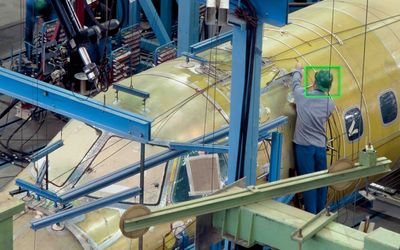
Struggling with safety compliance and quality control in manufacturing? Discover how Matroid’s no-code computer vision platform is transforming the industry with real-time defect detection, PPE monitoring, and predictive maintenance.


Brain–machine interfaces (BMIs) have enabled a handful of test participants who are unable to move or speak to communicate simply by thinking.

4 minutes read

webinar | JAN 15, 2025

Join us for The Rise of Generative AI at the Edge: From Data Centers to Devices webinar on Wednesday, January 15th


AI in the IoT also needs to be performed as close to the sensors as possible, all the way to the edge, on increasingly capable devices in terms of compute power.

4 minutes read


Creating realistic 3D models for applications like virtual reality, filmmaking, and engineering design can be a cumbersome process requiring lots of manual trial and error.


This new device uses light to perform the key operations of a deep neural network on a chip, opening the door to high-speed processors that can learn in real-time.


EPFL research investigating the potential impact on education of AI assistants has found that systems like GPT-4 can answer up to 85% of university assessment questions correctly.

4 minutes read


The method could help communities visualize and prepare for approaching storms.


Stanford engineers are testing foods using an approach that combines a three-dimensional mechanical technique and AI to mimic our sensory experience.

4 minutes read


Artificial intelligence (AI) is rapidly transforming healthcare by leveraging machine learning techniques to analyze medical images, patient data, and genetic information with unprecedented speed and accuracy, significantly improving early disease detection and enhancing diagnostic precision.


This article examines gen AI’s impact on data center design and operations and explores the changes necessary to support its continued development.


Large language models (LLMs) are increasingly automating tasks like translation, text classification and customer service. But tapping into an LLM’s power typically requires users to send their requests to a centralized server — a process that’s expensive, energy-intensive and often slow.

4 minutes read


Fine-tuning large language models adapts pre-trained models to specific tasks or domains using tailored datasets, while Retrieval-Augmented Generation (RAG) combines retrieval systems with generative models to dynamically incorporate external, up-to-date knowledge into outputs.

event | NOV 27 - NOV 28, 2024

Learn how manufacturers are leveraging IoT, AI, and automation to tackle global competition, meet sustainability goals, and enhance customization at Hexagon Live on November 27th-28th.